Every summer, my parents would send me to the most beautiful, rugged, hippie-fied summer camp for 2 weeks. It remains one of my most favorite spots anywhere and one of the greatest gifts my parents ever gave me. It’s where I could be free, where I discovered who I was and where I forged lifelong friendships that I cherish to this day.
The summer I turned 14, I became a CIT (counselor in training). Essentially, I had outgrown the camper experience and became junior staff that helped meal prep, building campfires, and generally helped make camp the amazing experience for younger kids that I had for the previous 6 years.
As part of that responsibility, each of the CITs took part in lifeguard training. We were sent to the top of the hill, about 200 yards from the sand entrance to the lake where we swam several times a day during the hottest weeks of the summer. Tree foliage surrounded the lake, so we couldn’t see what was happening in the water until we came down the hill to the sand. Just the sounds of someone screaming “Help! Help me!” A counselor would pretend to be a camper in trouble in the water while another counselor observed to see how we would do with swim safety. We were given no instructions other than to respond to the call when we heard someone yelling for help and one by one, we would take our turns to run down the hill and come to the rescue of a thrashing, flailing person screaming for help in the water.
I was confident. I was a strong swimmer. I had been at camp for many moons and I knew my way around the lake. I was someone who would remain calm under pressure. No sweat, I told myself.
When it was my turn to respond, I ran as fast and as hard as my skinny, teenage body would take me. We were to treat the exercise as if it were a real threat and I was going to take my responsibility seriously! Chest heaving, dodging tree roots, hopping down the hill with bare feet, I said silently to myself “stay calm, no matter what. STAY CALM.”
As I rounded the beach to find the counselor flailing in the water, making a fine display of real panic, all sense of calm left my body. All I could think about was speed. The faster I get to the “drowning” victim to save them, the better job I will have done. Running through the water, past the ropes & buoys into the deeper water, yelling “I got you! I got you!”, I reached for them, proud of my effort and speed upon arrival. As I opened my mouth to tell them that I was there to help, they jumped onto my body, wrapping their legs around my torso and sinking my head beneath the surface. I struggled to come up for air, swallowing water and feeling my chest burn, I began to panic. Coming up for air, I tried another tactic to get them on their back so that I could pull them to shore. They wrapped their arms around my neck, yelling “I can’t swim! I can’t swim” and again, I was pulled under by the weight of us both. Dark, murky lake water meant I lost all sense of where I was. I couldn’t see the shore. I couldn’t even see my hand in front of my face. I tried. My eyes burned when I opened them underwater. I tried sinking so that I could push from the bottom but I couldn’t get free of their grasp. All of this happened in probably 20-30 seconds, but as I sit here today 30 years later, I can still feel that panic in my chest when I could not get air. It was genuinely a terrifying experience, one I needed to have in order to understand the gravity of lifeguard responsibilities.
Lesson learned.
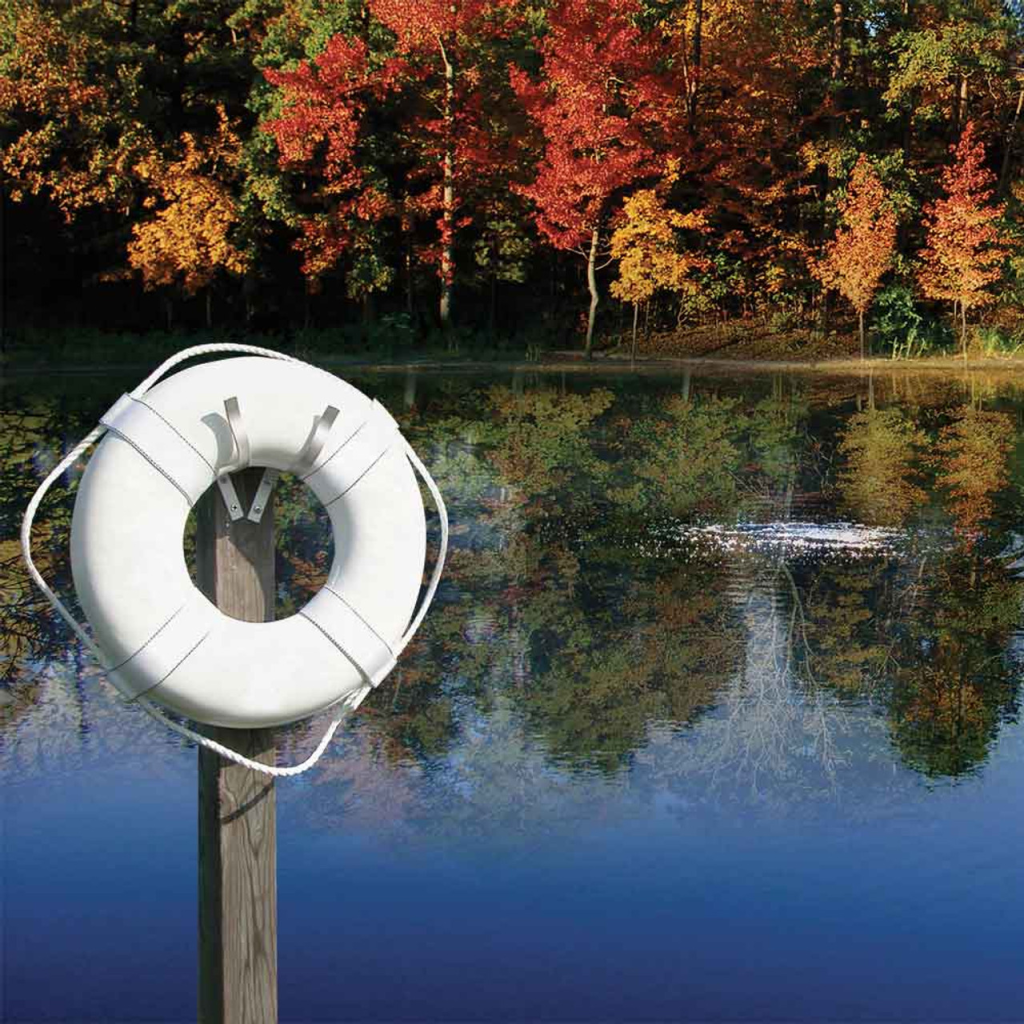
You don’t go into the water to help someone without a flotation device or something for someone to grab onto to pull them to shore.
And why do I tell you this today?
I’ve thought about that exercise many times through the years. How overly confident I was in my ability to help and how my attempt to help was really dangerous to us both. Standing on that hill, planning my great save, hot breeze blowing against my sunkissed skin, I just KNEW I had all the answers. Sitting on that beach afterward, hot tears of embarrassment & anger running down my cheeks, I knew I definitely didn’t. Had the exercise been real, it’s likely we could have both drown in those waters, panic driving poor decision making.
As an adult, this lesson rises to the top when I need to be reminded of this:
I cannot sacrifice my well being to rush into someone else’s emergency.
Sounds so common sense, I know. You don’t drown yourself to save another, Heather. Duh.
Except what if you have the best intentions and you see someone you love struggling? They’re flailing in life, yelling “I need help! Someone see me! I’m right here!” and you look around to see that no one else seems to be in a rush to help. Maybe they don’t have anyone else. Maybe the crowd is metaphorically pulling out their phone to record the drama. Maybe those that have helped in the past are now dealing with their own crises. All you know is that this person you love and believe in is begging for air and maybe you have the answers they seek.
So you wade into the waters of their emotional crisis, assuring them “I’ve got you!” only to be pulled under in the undertow of their despair. You had good intentions. You were confident in your ability. And it took just a moment to get pulled into the murky waters of their drama before you realize you can’t catch your breath. What began as a well intentioned rescue mission is now a dangerous battle of wills. They’re getting stronger, hanging onto you, getting the air they need and resting their body for a few much-needed seconds. You? You’re growing weaker trying to hold you both up, getting pushed down to provide the stability they need to get above the waves.
So, what is the answer? I think it’s finding something to pull them out of their crisis in the moment, but not giving your whole self over to it.
Have you looked around to see what resources are available to help? Is there a flotation device nearby? Can you refer them to a trusted therapist, pastor or mentor?
Where are the boundaries of this emergency? How far into the waters can you go yourself before you lose sight of shore? What do YOU need to watch for before their emergency becomes yours?
Because giving yourself to someone else’s crisis is easy to do. Sometimes, you’re knee deep in the waters before you even know it. You love them. You have noble motives. You have the opportunity to set your “stuff” aside to focus on someone else. That is, until you can’t breathe and you have a choice to make. Me or you. ME OR YOU.
There’s nothing noble about sacrificing yourself on the hill of someone else’s unhealthiness. Helping someone is not the same thing as saving them. Sometimes, it means telling that person, “I can see that you’re struggling and I know that I don’t have the skills to help the way I want to. Let’s talk about how we can make a plan for you to get the help you need and I can help keep you accountable to that.”
And that person you care about? They may get angry. They may tell you that you must not care enough to fix it. They may not be ready to get the help they need. That’s their choice.
You have the choice to set good boundaries and reject co- dependency that tells you those false messages. We are all responsible for our own healing.
Let me say that again.
We are all responsible for OUR OWN HEALING.
So, pause. Take in the scene of another person’s emergency. Is this a situation that needs a helping hand? Are you emotionally equipped? If not, say so.
We all deserve the chance to swim freely in the waters of our choice, smiling faces turned up to the sun, soaking in the personal work we’ve done to get there. Don’t deny someone else the opportunity to experience that for themselves.
 Heather Hilbert
Absolutely BEAUTIFULLY Done!!! Thank you!!!
LikeLike